
Am I Nima Guide: First Hour, Trust and Word Basics
A practical Am I Nima guide for the first hour: how to collect words, pass Mom's tests, protect trust and avoid the mistakes that close branches.
The first hour of Am I Nima decides how much of the game you get to see. Not because there is a difficulty curve, but because the opening chapters teach you a language while Mom is grading you on it. Miss too many words, answer too honestly, or treat the tests as a quiz to win, and the later conversations lose options before you notice they are gone.
This guide covers the opening loop without spoiling the endings. It pairs with the Am I Nima walkthrough→ for exact chapter routing and the Am I Nima trust→ page for the response-color system. Read those after your first test if you want to stay unspoiled; read this one before you start.
The wiki hub→ collects every page, and the walkthrough→ takes over once the first hour is done.
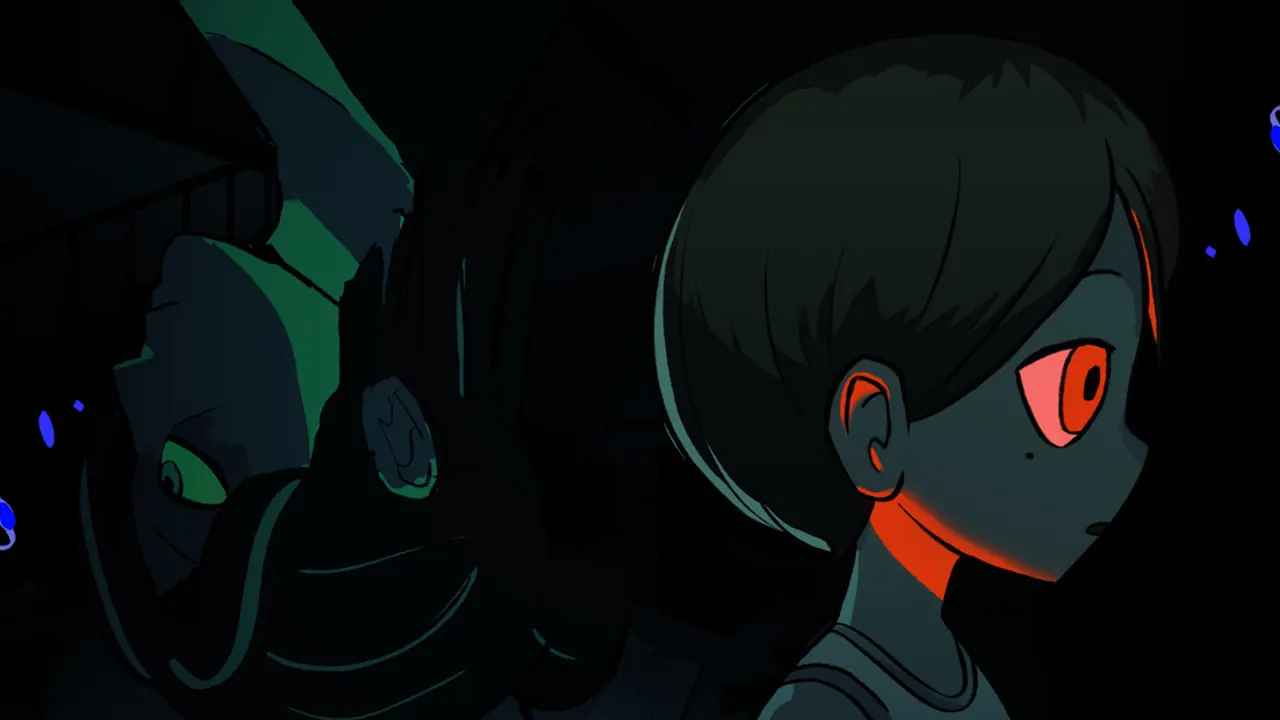
Explore before you answer. Almost every test gives you time to inspect the room first, and the words you find change which replies are available. A patient first hour saves a whole second loop.
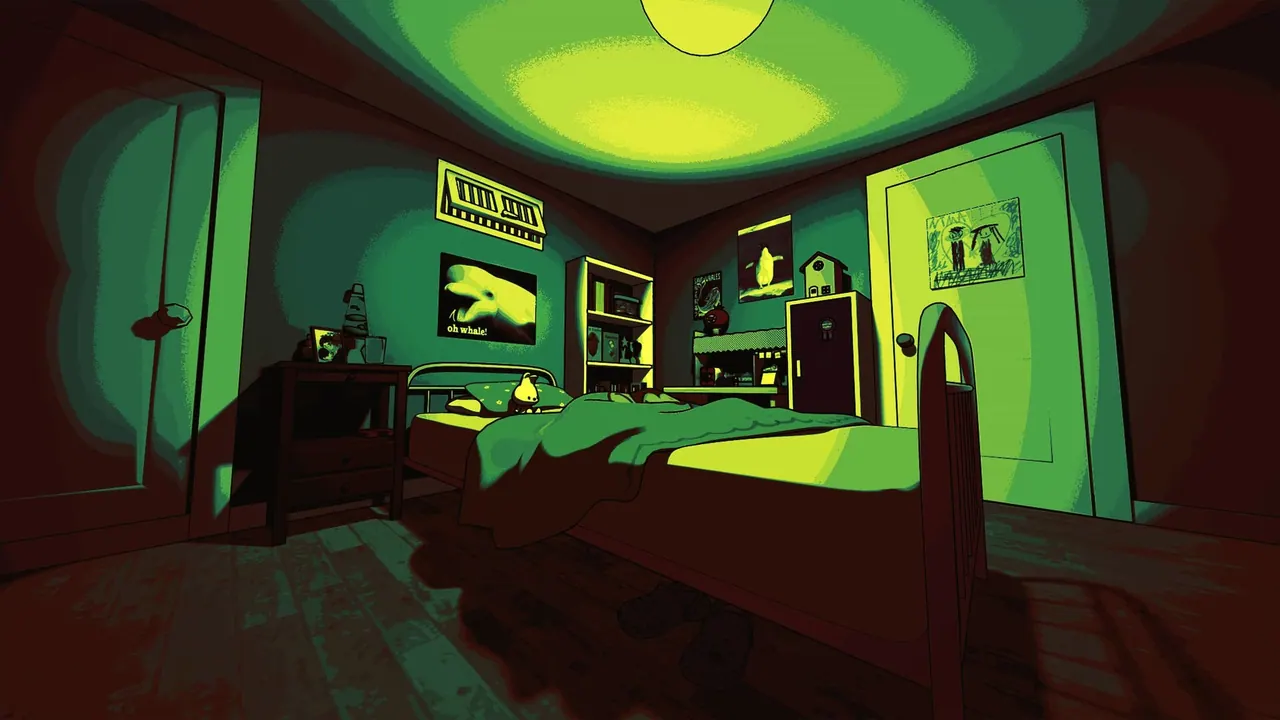
Start by learning what a word is
Words are not items. You do not pick them up from a shelf and carry them in a bag. You inspect something, listen to Nima's reaction, and the game quietly adds the concept to her vocabulary. Some words come from objects, some from dialogue, and some only appear after you combine two earlier words.
That means a room is never finished on the first pass. The bedroom alone hides words behind the poster, the shark plush, the photo, the locker, the bed, and the drawings on the door. If you walk through after the first conversation and go straight to the next test, you will leave with half a vocabulary.
The library organizes words by category, but the categories are loose. Fear, Family, and Love sit near each other. Death and Light do too. Do not assume a word is useless because it sounds abstract. The game rewards emotional pairs more often than literal ones.
Use Available Choices before every reply
The Available Choices filter is the best quality-of-life feature in the game and the easiest one to forget. Open the word library during a test, toggle the filter, and the list shrinks to words Mom will actually accept as an answer. It does not tell you which answer is best. It tells you which answers exist.
That distinction matters. A test might accept Family, Love, and Fear. All three move the conversation, but they move Mom differently. Family tends to reassure her. Fear tends to make her lean in. Love can do either, depending on the memory you have unlocked.
Use the filter to see the shape of the conversation, then pick by intent, not by color. The Am I Nima words→ page explains how the library, favourites, and history interact.
Pass the first test without overthinking it
The opening test is a recognition check. Mom wants to know whether Nima knows who she is. The answer is built from two words, and the game gives you both before it asks: Nima and Stranger. Combine them and the result is Mom.
If you are stuck on that first combination, you are not alone, but you are also overcomplicating it. Am I Nima uses simple noun pairs early and saves the emotional algebra for later. When a test feels impossible, look for two words that describe the same person from different angles.
The first test is also where most players learn the wrong lesson. Passing feels like winning, so they keep choosing the safest answer. Safe answers build trust, but they do not build memory. You need both. A run that never risks a strange reply will reach an ending, just not the one that explains the house.
Protect trust by spending it deliberately
Trust is not a number you can max out. It is a tolerance that Mom extends to you, and every test draws on it. Green responses usually add to it. White responses hold it steady. Red responses spend it.
The trap is that red responses are often the honest ones. Nima remembers something disturbing, tells Mom the truth, and the conversation becomes more dangerous but also more revealing. That is the trade the game wants you to make. You cannot uncover the whole story by being agreeable.
A working rhythm for the first two chapters:
- Answer the first question of a test safely. This establishes cooperation.
- Inspect one new object while Mom waits.
- Use the riskier reply on the second or third question, when you have trust in reserve.
- End the test on a calm note if you can. Mom remembers the last thing you said.
This is not a guarantee. It is a way to keep the conversation alive while still learning something.
Do not reload after every wrong answer
The autosave is generous, and reloading is easy, which makes perfectionism tempting. Resist it on the first loop. A wrong answer often reveals a word or a reaction you cannot get any other way, and the game is short enough that a second loop is part of the design rather than a punishment.
Reload when a test ends badly enough to lock a room, or when you are chasing a specific ending and need a clean branch. Otherwise, let the conversation go badly. Some of the best material in Am I Nima comes from Mom's disappointment.
Collect the optional words early
Three optional words in the opening chapters do most of the work for later endings: Obsession, Consumption, and Grief. Obsession comes from combining Life and Fossil, both found in the bedroom. Consumption comes from Pride and Guilt, which surface through the dream note. Grief comes from Nima and Dad.
None of them are required to finish a first run. All of them open dialogue in the final chapters. If you want the true ending on your second loop, collect them before you leave Chapter 2. The Am I Nima how to get Obsession→ page has the exact object locations.
Know when to stop and reset
The game does not announce a point of no return. Chapters flow into each other, and the loop structure means a bad run can still become a useful one. The practical reset point is the end of Chapter 2: if you have fewer than forty words, missed the locker, or never unlocked a memory, start a fresh loop instead of pushing forward.
A fresh loop is not a wipe. The game tracks what you have learned, and the second pass is faster because you already know the room layouts and the early tests. Treat the first loop as a reconnaissance run. Treat the second as the one where you spend what you know.
What to read next
If you want the exact route through the opening chapters, continue to the walkthrough→. If a specific test is blocking you, check the trust page first; most dead ends are trust problems, not word problems. If you are chasing endings, go to the endings hub→ and pick a target before you start the next loop.
Official source: Am I Nima on Steam ↗
FAQ
How many words should I have after the first hour?
Around thirty to forty if you inspect thoroughly. The achievement for 101 words is a mid-game milestone, not an early one.
Can I fail a test permanently?
No. A failed test changes Mom's attitude and may close a conversation branch, but the story continues. Permanent failure is reserved for endings.
Should I use a guide on the first run?
Use the walkthrough only when you are stuck for more than ten minutes. The first loop is designed to be explored, and the game is short enough that a blind run is worth it.
Does the game punish reloading?
No. Autosave and manual reload are both supported, and the ending achievements are tracked per profile. Reloading only costs time.
Sources and further reading
- Am I Nima store page ↗ — official feature list and release details
- Noisy Pixel review ↗ — loop structure and true-ending pacing
- Steam community hub ↗ — player reports on tests and codes