
Am I Nima All Endings List: Every Outcome and Odds
Every Am I Nima ending in one list, with unlock rates, the achievement behind each name and what the rarity curve says about how to reach the rarest outcomes.
There are eleven endings in Am I Nima, and every one of them has an achievement attached. That makes the list unusually easy to verify: you do not have to trust a wiki's numbering, because Steam's global achievement data names each outcome and shows what share of players reached it.
This page is the reference list. It gives the name, the achievement, the unlock rate, and a short reading of what the ending is about. For the systems that decide which one you get, start with the Am I Nima endings→ hub. For the story behind the rarest outcomes, read the ending explained→ page.
The endings hub→ explains the shared levers, while the trust page→ covers the score that decides how the last conversation goes.
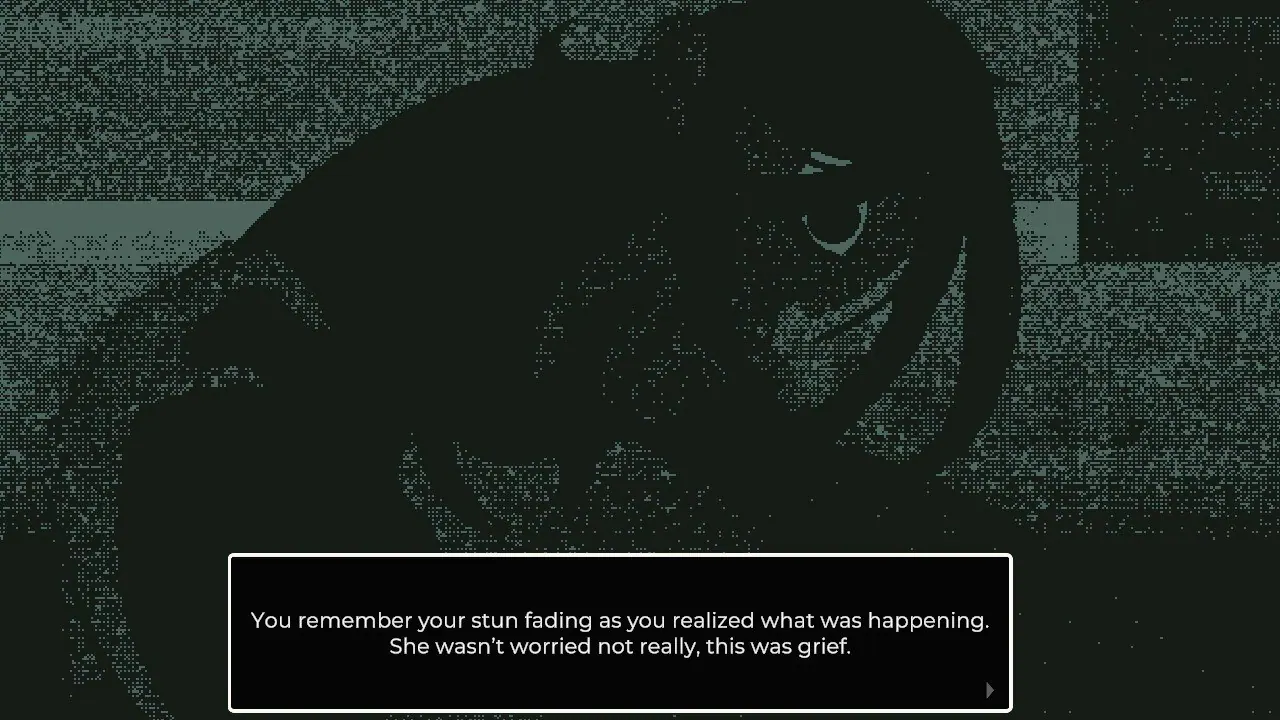
The common endings are the emotionally simple choices. The rare endings need setup, not skill. If an ending is under 2%, assume it requires a memory, the lab, or a specific trust band rather than a clever line.
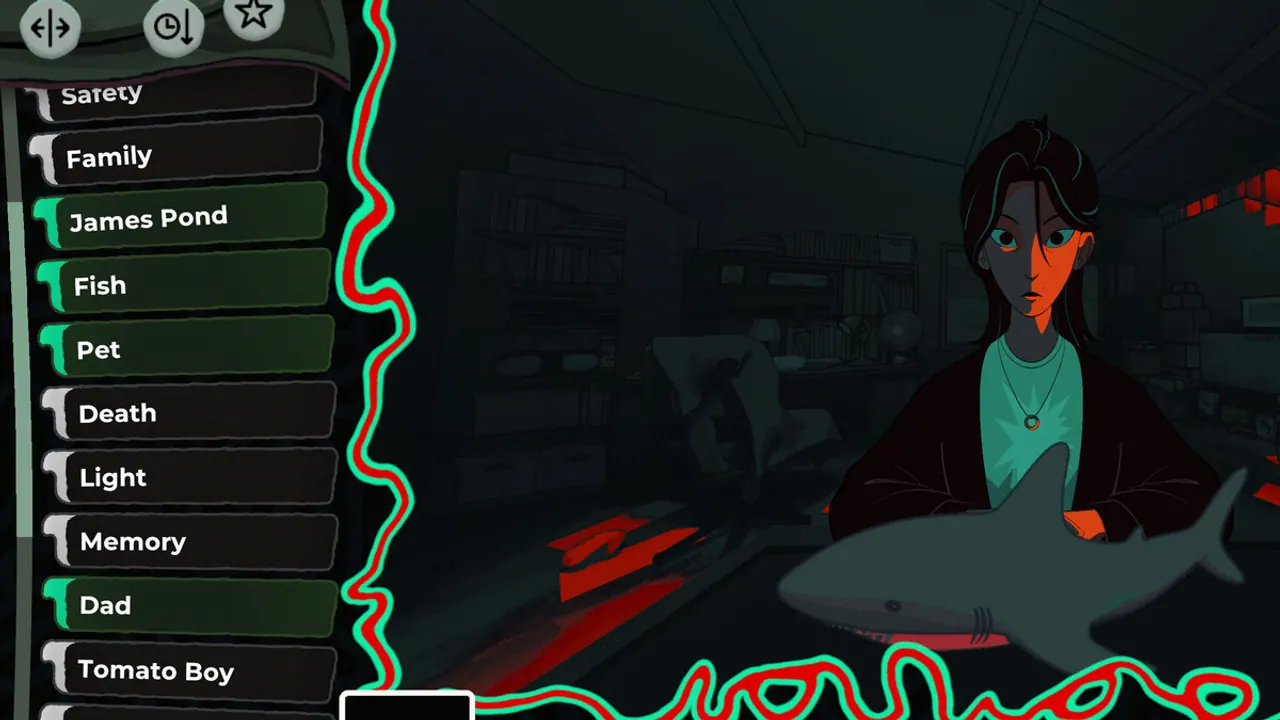
The eleven endings in one table
| # | Ending | Achievement | Global unlock |
|---|---|---|---|
| 1 | Martyr | Martyr | 11.0% |
| 2 | Loyalty | Loyalty | 9.6% |
| 3 | Monster | Monster | 8.1% |
| 4 | Duplicity | Duplicity | 5.7% |
| 5 | Stasis | Stasis | 2.1% |
| 6 | Acceptance | Acceptance | 2.0% |
| 7 | Judgement | Judgement | 1.9% |
| 8 | Assimilation | Assimilation | 1.8% |
| 9 | Fissure | Fissure | 1.8% |
| 10 | Carnage | Carnage | 0.7% |
| 11 | Symbiosis | Symbiosis | 0.2% |
The spread is steep. Martyr is more than fifty times more common than Symbiosis. That is not a difficulty curve in the usual sense; it is a specificity curve. The rare endings require more conditions to line up.
The common tier: Martyr, Loyalty, Monster
Martyr is the ending most players see first. It reads as sacrifice: Nima gives something up, possibly herself, to resolve the situation. The high rate suggests it is reachable from a warm-but-passive route, where the player reassures Mom and then accepts the cost.
Loyalty is the stay ending. Nima sides with Mom and the family story, and the game frames that as a choice rather than a failure. It is the natural outcome of high trust plus low exposure to the lab.
Monster is the hostile mirror. Nima becomes what the house was afraid of. It is common because fear is easy to accumulate: challenge Mom repeatedly, refuse the family frame, and the conversation turns.
These three form the emotional triangle the game expects most players to land in. They are also the three most likely to be seen on a blind first run.
The middle tier: Duplicity, Stasis
Duplicity sits just under six percent and is the first ending that feels like a trick. The name implies a lie that works, at least for now. Players who reach it often describe the final illustration as the most disturbing in the game, which fits an outcome built on a false peace.
Stasis is the loop ending. Nothing resolves, and the house continues. At 2.1%, it is rarer than the warm and hostile endings, which suggests it requires a deliberate refusal rather than a mistake. If you have been avoiding commitment in the final conversation, this is where you land.
The rare tier: Acceptance, Judgement, Assimilation, Fissure
Acceptance at 2.0% reads as Nima accepting what she is, rather than what Mom wants her to be. That distinction matters: it is not submission, and it is not rebellion. It is the first ending that sounds like growth.
Judgement at 1.9% turns the question outward. The house, or Mom, is judged. This is the ending most often cited in discussions of the true ending, though the game does not label it.
Assimilation at 1.8% is absorption. Nima becomes part of the family story so completely that the boundary disappears. It pairs thematically with Monster but is colder and quieter.
Fissure at 1.8% is the break. The illusion cracks and cannot be repaired. It is the natural counterpart to Loyalty, and the two are almost certainly incompatible.
The outliers: Carnage and Symbiosis
Carnage is the violent ending, and at 0.7% it is the second rarest. Whatever it requires, it is not the default hostile path; Monster already covers that. Carnage likely needs a specific escalation, possibly in the lab.
Symbiosis is the rarest at 0.2%, and the name is the most hopeful in the list. Mutual survival. Two organisms living together. If the true ending is not Judgement, it is probably this one, and the setup cost would explain why almost nobody has seen it.
How to hunt a specific ending
Work backward from the rarity, not forward from the name.
- Decide which tier your target sits in.
- If it is common, play naturally and lean into the matching tone.
- If it is rare, finish the memory chains first. Memories give Nima the arguments that rare endings need.
- Enter the lab. The Bunker achievement is only 2.0%, which means most players never see the room where the late-game rules are explained.
- Save before Chapter 5 and change one lever at a time.
The trust page→ explains the response colors, and the walkthrough→ gets you to the final room without missing the lab.
Why the achievement list is the best source
Most games hide their endings behind datamined strings. Am I Nima puts them in the achievement list with plain names, and Steam publishes the global percentages. That gives us a verifiable list even though no official ending guide exists.
The limitation is that achievements do not explain triggers. A name like "Symbiosis" tells you the theme but not the reply. Treat this page as the what, and the ending pages as the how.
Endings and replay length
A first run is four to six hours. A focused second loop to a different ending is roughly three, because vocabulary carries over and you already know the rooms. That makes ending hunting unusually affordable for a horror game, and it is the main reason the completion rate for the common endings is as high as it is.
If you are missing only one or two endings, a targeted loop is faster than a full replay. If you are missing four or more, start fresh and plan the levers from Chapter 1.
Official source: Am I Nima on Steam ↗
FAQ
Are there eleven or thirteen endings?
Eleven. The developer corrected an earlier statement of thirteen in November 2026.
Which ending is the true ending?
The game does not label one. Judgement and Symbiosis are the strongest candidates based on theme and rarity.
Do endings carry over between saves?
Achievements do. The word library carries across loops within a save.
What is the fastest way to see a second ending?
Save before the Chapter 5 conversation, finish any missing memory chain, then reload and change your final stance.
Sources and further reading
- Am I Nima on Steam ↗ — achievement names and global percentages
- Noisy Pixel review ↗ — true ending and loop structure
- Steam community discussions ↗ — memory gates and progression reports